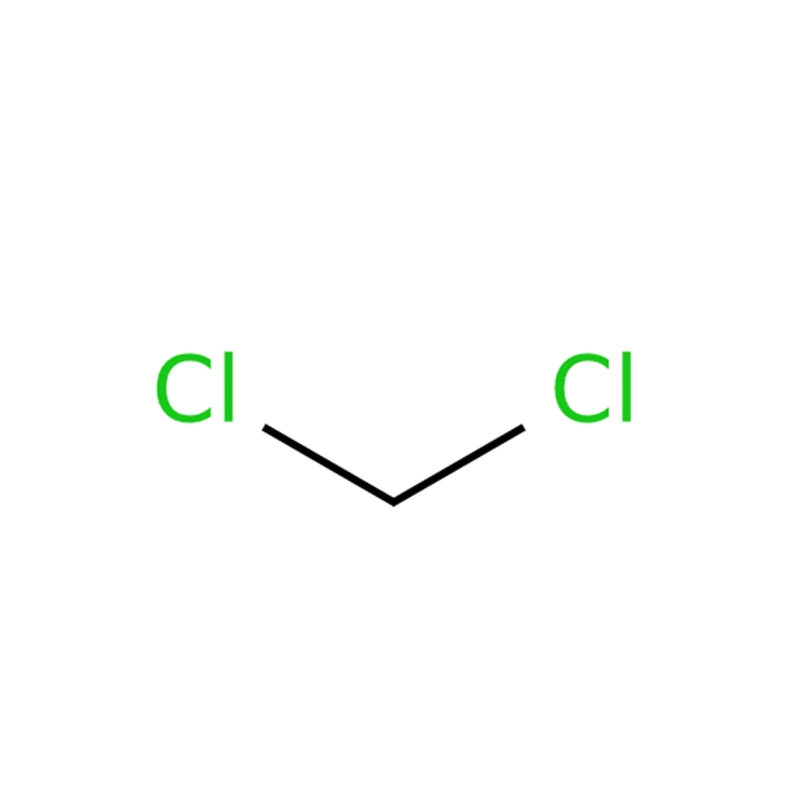
Product Description of Dichloromethane CAS#75-09-2
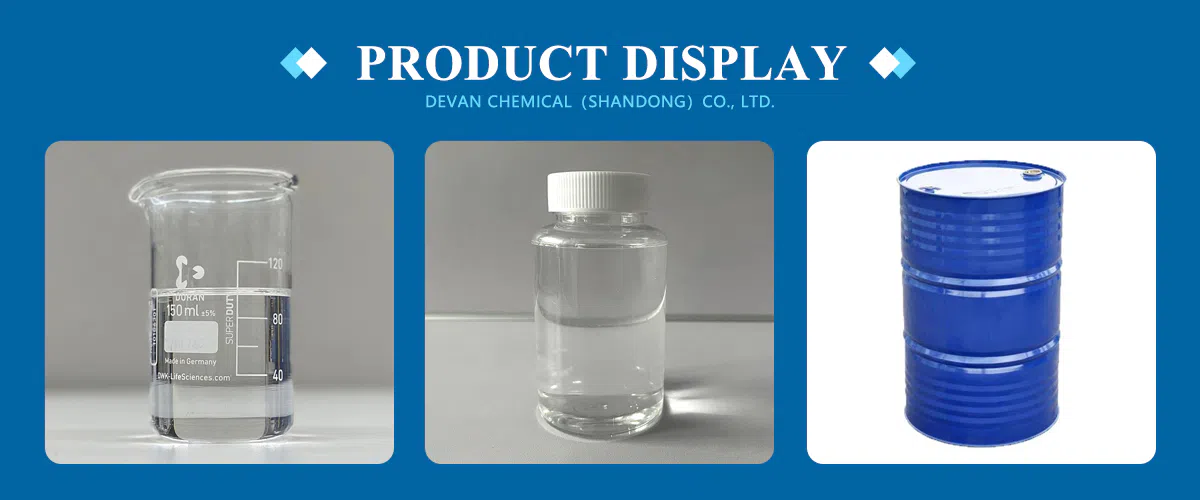
Dichloromethane, also known as methylene chloride, has molecular formula CH₂Cl₂ and molecular weight of 84.93.It is formed by substituting two hydrogen atoms of methane with chlorine atoms. It is a clear, colourless volatile liquid with faint ether-like odour. Its boiling point is 39.8-40 °C and density is 1.326 g/cm³ at 20°C. Slightly soluble in water, fully miscible with ethanol, ether and many organic solvents.
It is non-flammable under normal conditions, with stabilizer added to resist hydrolysis. Available in industrial, HPLC and pharma grades. This versatile chlorinated solvent is widely used in extraction and cleaning.
Dichloromethane Chemical Properties
| Melting point | -97 °C |
| Boiling point | 39.8-40 °C mm Hg(lit.) |
| density | 1.325 g/mL at 25 °C(lit.) |
| vapor density | 2.9 (vs air) |
| vapor pressure | 24.45 psi ( 55 °C) |
| refractive index | n20/D 1.424(lit.) |
| Fp | 39-40°C |
| storage temp. | room temp |
| Miscible in ethyl acetate, alcohol, hexanes, methanol, diethyl ether, n-octanol, acetone benzene, carbon tetrachloride, diethyl ether and chloroform. | |
| form | Liquid |
| color | APHA: ≤10 |
| Specific Gravity | 1.329 (20/20℃) |
| Odor | Odor threshold 160 to 230 ppm |
| Odor Threshold | 160ppm |
| explosive limit | 13-22%(V) |
| Water Solubility | 20 g/L (20 ºC) |
| λmax | λ: 235 nm Amax: 1.00 |
| λ: 240 nm Amax: 0.20 | |
| λ: 250 nm Amax: 0.05 | |
| λ: 260 nm Amax: 0.02 | |
| λ: 340-400 nm Amax: 0.01 | |
| Merck | 146063 |
| BRN | 1730800 |
| Henry's Law Constant | 2.49 at 30 °C (headspace-GC, Sanz et al., 1997) |
| Dielectric constant | 9.1(20℃) |
| Exposure limits | TLV-TWA 50 ppm (~175 mg/m3) (ACGIH); carcinogenicity: Suspected Human Carcinogen (ACGIH), Animal Sufficient Evidence, Human Inadequate Evidence (IARC). |
| Stability: | Volatile |
| LogP | 1.25 |
| CAS DataBase Reference | 75-09-2(CAS DataBase Reference) |
| NIST Chemistry Reference | Methylene chloride(75-09-2) |
| IARC | 2A (Vol. Sup 7, 71, 110) 2017 |
| EPA Substance Registry System | Methylene chloride (75-09-2) |
Safety Information
| Hazard Codes | Xn,T,F,N,C |
| Risk Statements | 40-39/23/24/25-23/24/25-11-67-36/37/38-68/20/21/22-20/21/22-50-37-34 |
| Safety Statements | 23-24/25-36/37-45-16-7-26-61-36/37/39 |
| RIDADR | UN 1593 6.1/PG 3 |
| WGK Germany | 2 |
| RTECS | PA8050000 |
| F | 46091 |
| Autoignition Temperature | 556 °C |
| Hazard Note | Harmful |
| TSCA | Yes |
| HS Code | 2903 12 00 |
| HazardClass | 6.1 |
| PackingGroup | III |
| Hazardous Substances Data | 75-09-2(Hazardous Substances Data) |
| Toxicity | LD50 orally in young adult rats: 1.6 ml/kg (Kimura) |
| IDLA | 2,300 ppm |
Product Applications of Dichloromethane CAS#75-09-2
Dichloromethane is a non-flammable solvent with a low boiling point. It finds extensive application in the manufacturing of cellulose acetate films, aerosols, antibiotics and vitamins. It can also act as an extractant, metal cleaner, degreasant and coating remover.
As a chemical feedstock, dichloromethane is utilised to synthesize fungicides including myclobutanil and imidazolin. Moreover, it occupies an important position in organic synthesis, cellulose triacetate fibre production, petroleum dewaxing processes and metal surface coating operations.
Other application scenarios cover grain fumigation and refrigeration equipment such as low-pressure freezers and air conditioning systems. Additionally, it acts as an auxiliary blowing agent for polyether urethane foam and serves as the primary blowing agent for extruded polysulfone foam.